
The Overlooked Component That Keeps Wood Panel Production Moving
When people think about a wood-based panel production line, they usually focus on major equipment such as debarkers, chippers, refiners, forming machines, or continuous presses.
However, many experienced engineers know that stable production often depends on much smaller components working behind the scenes.
One of those components is the Rotary Valve.
Although compact and often installed beneath silos, cyclones, or dust collectors, a Rotary Valve plays a vital role in keeping materials flowing smoothly while maintaining the pressure balance of the entire conveying system.
Without it, even the most advanced production line can suffer from unstable feeding, pressure loss, dust leakage, and unnecessary downtime.
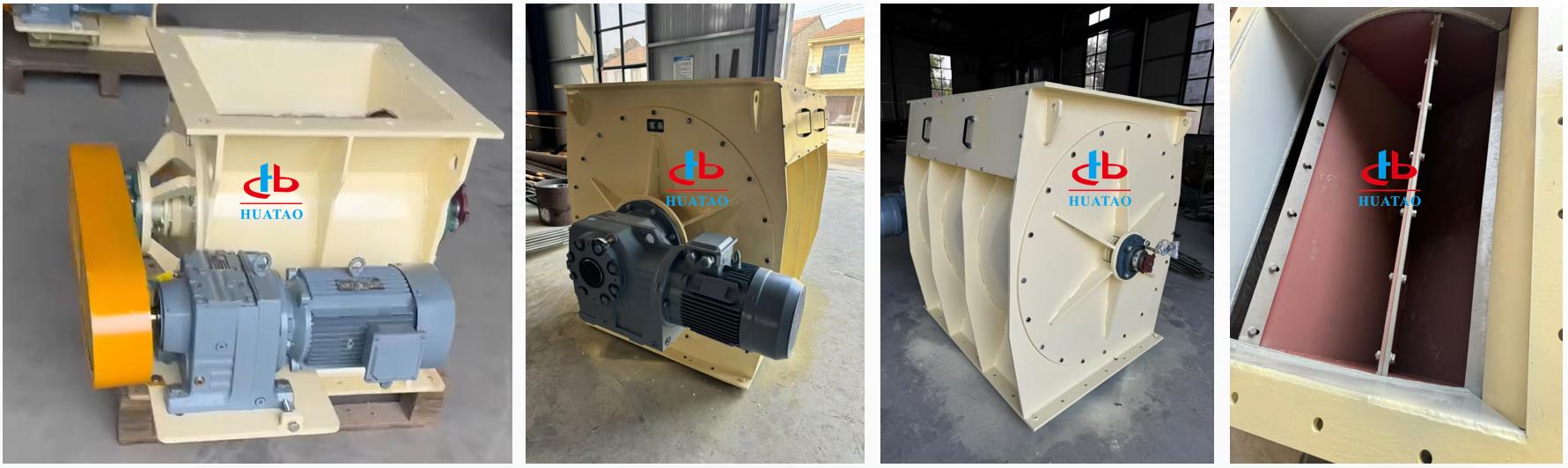
More Than a Material Discharge Device
Many people assume that a Rotary Valve simply discharges material from a hopper.
In reality, its function is far more important.
A properly designed Rotary Valve performs three key tasks simultaneously:
Delivers a continuous and controlled flow of material.
Maintains an effective airlock between areas of different pressure.
Protects the efficiency of the pneumatic conveying system.
These functions make it an indispensable component in modern MDF, HDF, Particle Board, OSB, and plywood manufacturing plants.
Why Air Sealing Matters
Most wood-based panel production lines rely on pneumatic conveying systems to transport wood fibers, sawdust, and other lightweight materials.
If air leaks occur during conveying:
System pressure becomes unstable.
Material flow becomes inconsistent.
Energy consumption increases.
Dust emissions become more difficult to control.
Drying and conveying efficiency decreases.
A Rotary Valve helps minimize these issues by maintaining pressure separation while allowing material to pass through continuously.
Where Rotary Valves Are Used
Throughout a wood-based panel production line, Rotary Valves can be found in multiple process areas, including:
Chip Preparation
Discharging wood chips from storage bins before they enter downstream equipment.
Fiber Preparation
Controlling the flow of fibers before drying and refining.
Drying Systems
Maintaining pressure balance while feeding dried material into the next process.
Cyclones and Dust Collectors
Removing collected dust without reducing system pressure.
Pneumatic Conveying Systems
Providing continuous feeding while preventing unwanted air leakage.
Biomass Material Handling
Transporting wood flour, sawdust, pellets, and other bulk materials efficiently.
What Makes a High-Quality Rotary Valve?
Not all Rotary Valves perform the same.
Reliable operation depends on several design factors:
Precision Machining
Accurate internal clearances help improve sealing performance and reduce air leakage.
Wear-Resistant Components
Abrasive wood particles require durable rotor blades and housing materials to ensure long service life.
Stable Rotor Design
Balanced rotors provide smooth operation, reduce vibration, and improve feeding consistency.
Proper Material Selection
Different applications may require carbon steel, stainless steel, or special wear-resistant materials depending on the conveyed product.
Choosing the Right Rotary Valve
Before selecting a Rotary Valve, manufacturers should evaluate:
Material type
Particle size
Moisture content
Bulk density
Conveying capacity
Pressure difference
Operating temperature
Wear conditions
Selecting the correct model helps improve conveying efficiency, reduce maintenance costs, and increase equipment reliability.
HUATAO Rotary Valve Solutions
HUATAO supplies Rotary Valves designed for demanding wood-based panel production environments.
Our solutions offer:
High air sealing performance
Stable and continuous material discharge
Wear-resistant construction
Long service life
OEM-compatible dimensions
Customized designs for different production requirements
Whether handling wood chips, fibers, sawdust, or biomass materials, HUATAO Rotary Valves help maintain efficient and reliable material conveying throughout the production line.
Conclusion
Large production lines rely on countless individual components working together. While Rotary Valves may not receive the same attention as major processing equipment, their contribution to stable conveying, pressure control, and production efficiency is significant.
Choosing a well-designed Rotary Valve is not simply about moving material—it's about protecting the performance of the entire production system.
Contact Us:
HUATAO Wood-Based Panel Machinery
Website: www.woodpanelmachinery.com
Email: bella@huataogroup.com
Whatsapp: +8617731169773=8617731169773
#RotaryValve #Rotary AirlockValve #StarFeeder #RotaryFeeder #AirlockValve
can not be empty
can not be empty

HUATAO Wood-based Panel Machinery Co., Ltd
ADD : No.298 Zhonghua North Street, Shijiazhuang 050000 China.
TEL : +86 0311 80690567
EMAIL :bella@huataogroup.com
Web: www.woodpanelmachinery.com
 WhatsApp & WeChat : +86 17731169773