
When a Bark Screen starts delivering inconsistent screening results, reduced capacity, or abnormal vibration, many operators immediately suspect the drive system, motor, or the screening machine itself.
But in many cases, the real problem may be much simpler:
The Screen Mesh or Screen Frame may already be worn, damaged, or out of specification.
For sawmills, wood-processing plants, biomass facilities, and other operations handling bark and wood residues, these components directly influence screening accuracy, material flow, and equipment stability.
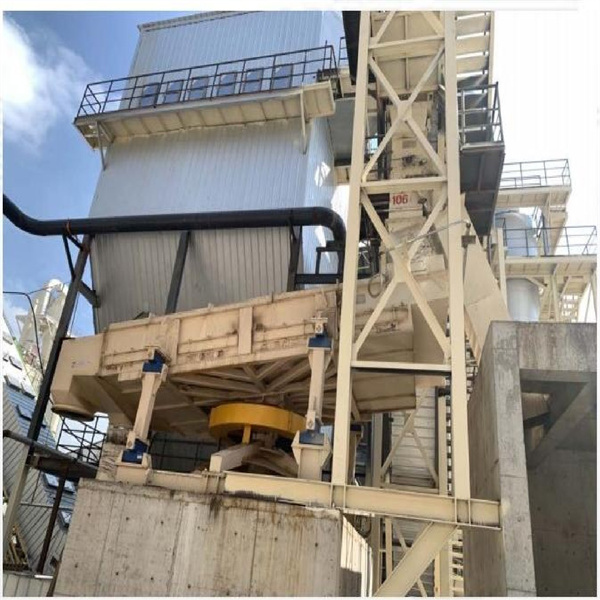
A Bark Screen operates continuously under mechanical vibration and repeated material impact.
Bark is not a uniform material. It can contain:
Over time, these materials can cause wear on the screening surface.
When the screen condition changes, the machine may continue running normally while the actual screening performance gradually deteriorates.
Typical symptoms include:
Before replacing major machine components, the screening surface should therefore be inspected.
The Bark Screen Mesh is the working surface that directly contacts the material.
Its opening size determines which particles can pass through the screen.
During long-term operation, continuous impact and abrasion can gradually change the original mesh geometry.
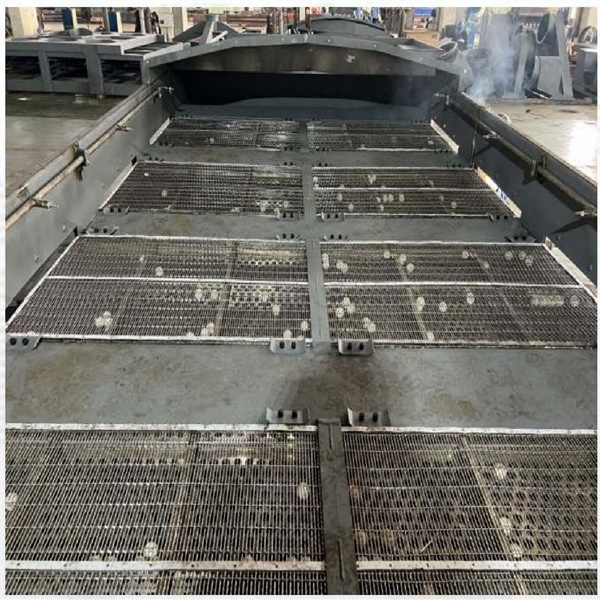
Common problems include:
Wear can make the original openings larger than their designed dimensions.
This may allow oversized bark or wood particles to pass through too early.
Damaged wires can create irregular openings and affect material classification.
Repeated impact or excessive loading may cause local deformation.
Wet bark, fibrous material, or irregular particles can accumulate in the mesh openings.
Certain areas may wear faster than others because of uneven material distribution.
These issues can significantly affect the final screening result.
A Bark Screen is designed around a specific screening requirement.
For example, the intended separation may depend on a particular:
Mesh Opening + Material Size + Material Moisture + Throughput
If the mesh opening changes because of wear, the screening performance can also change.
This is why operators should not judge a screen only by whether it is physically broken.
A screen can still look usable while its effective screening accuracy has already deteriorated.
The Screen Frame is another component that deserves attention.
While the Screen Mesh performs the separation function, the frame supports and positions the screening surface.
The frame must withstand:
If the frame becomes deformed or damaged, the mesh may no longer remain in its intended position.
This can lead to:
Therefore, replacing the mesh without checking the frame may not always solve the underlying problem.
The relationship is straightforward:
Screen Frame
↓
Supports the Screen Mesh
↓
Maintains the correct screening surface
↓
Controls material separation
↓
Supports stable screening performance
A high-quality Screen Mesh cannot perform correctly if the supporting frame is severely deformed.
Likewise, a strong Screen Frame cannot compensate for a worn or incorrectly specified mesh.
For this reason, both components should be evaluated as part of the same screening system.
The material fractions are no longer consistent with the original production requirements.
Wear has enlarged or distorted the original openings.
Broken wires or damaged sections are visible during inspection.
Material repeatedly accumulates in the same screening areas.
The equipment requires more time to process the same quantity of material.
These signs do not necessarily mean that the entire Bark Screen needs to be replaced.
In many cases, replacing the appropriate Screen Mesh or repairing the Screen Frame can restore the screening system.
The frame should be carefully inspected when:
A damaged frame can shorten the service life of a new screen mesh.
Therefore, replacing both components when necessary can be more effective than replacing the mesh repeatedly.
When ordering replacement parts, the product name alone is not enough.
For Bark Screen Mesh, important information may include:
For Bark Screen Frame, additional information may include:
Providing photographs and technical drawings can significantly improve replacement accuracy.
Two Screen Meshes may look almost identical but have different:
Similarly, two Screen Frames with similar external dimensions may have different mounting structures.
Therefore:
Similar Appearance ≠ Same Specification
For industrial screening equipment, dimensional and structural compatibility should always be verified before production.
Regular inspection can help identify problems before they develop into major downtime events.
Operators can periodically check:
Screen Mesh
Inspect for wear, broken wires, deformation, and blockage.
Screen Frame
Check for cracks, bending, loose connections, and damaged mounting points.
Fasteners
Make sure bolts and fixing components remain secure.
Screen Surface
Remove accumulated bark and foreign material when necessary.
Machine Vibration
Monitor changes in vibration and unusual operating noise.
Material Flow
Observe whether the screened material remains consistent.
Small changes in screening performance can be an early warning of component wear.
HUATAO supplies Bark Screen spare parts for wood-processing and biomass applications.
Our related screening products include:
For replacement projects, customers can provide:
Equipment Model + Original Part Information + Dimensions + Photos + Drawings
HUATAO can evaluate the required specification and provide a customized manufacturing solution.
For industrial customers, replacing a screening component is not simply a purchasing decision.
The real objective is to achieve:
Correct Fit
Stable Screening
Reliable Service Life
Reduced Maintenance
Less Production Downtime
This is why understanding the complete Bark Screen structure is important when selecting replacement parts.
When a Bark Screen begins to show reduced screening efficiency, the machine itself is not always the first component that should be blamed.
The Screen Mesh and Screen Frame are two critical areas that should be inspected before making major equipment decisions.
A worn mesh can change the effective screening opening. A damaged frame can affect mesh positioning, tension and overall structural stability.
For sawmills, biomass plants, wood-processing facilities and other applications handling bark and wood residues, maintaining these components can help support stable screening performance and reduce unnecessary downtime.
HUATAO provides Bark Screen Mesh, Bark Screen Frame and customized screening spare parts for wood-processing applications.
HUATAO Wood-Based Panel Machinery Co., Ltd.
Email: bella@huataogroup.com
WhatsApp / Tel: +86 17731169773
Website: www.woodpanelmachinery.com
For Bark Screen Mesh, Bark Screen Frame, Bark Screen Spare Parts and customized screening components, please send us your equipment model, drawings, dimensions, photographs or original part numbers.
#HUATAO #BarkScreen #BarkScreenMesh #BarkScreenFrame #BarkScreenSpareParts #BarkScreening #BarkScreeningMachine #WoodChipScreening #WoodWasteScreening #BiomassScreening #ScreenMesh #ScreenFrame #ScreeningSpareParts #SawmillEquipment #WoodProcessingMachinery #BiomassEquipment #WoodProcessingEquipment #ScreeningMachine #WoodBasedPanelMachinery #IndustrialScreening
can not be empty
can not be empty

HUATAO Wood-based Panel Machinery Co., Ltd
ADD : No.298 Zhonghua North Street, Shijiazhuang 050000 China.
TEL : +86 0311 80690567
EMAIL :bella@huataogroup.com
Web: www.woodpanelmachinery.com
 WhatsApp & WeChat : +86 17731169773