
In wood-based panel manufacturing, controlling the amount of material entering the forming section is only one part of achieving a stable board.
The more difficult challenge is making sure that the material is distributed and formed with sufficient consistency across the mat.
A production line can deliver the correct total quantity of furnish while still experiencing local differences in material concentration, mat thickness or bulk density.
This is where the Machine of Density Equalizer, also referred to as a Density Equalizer or Mat Density Equalizer, becomes an important component of the forming section.
Its purpose is to help create a more consistent material condition before the mat enters downstream processes such as pre-pressing and hot pressing.
Modern mat-forming systems place strong emphasis on controlling both longitudinal and crosswise density characteristics, while equalizing devices are used within forming systems to improve mat uniformity.
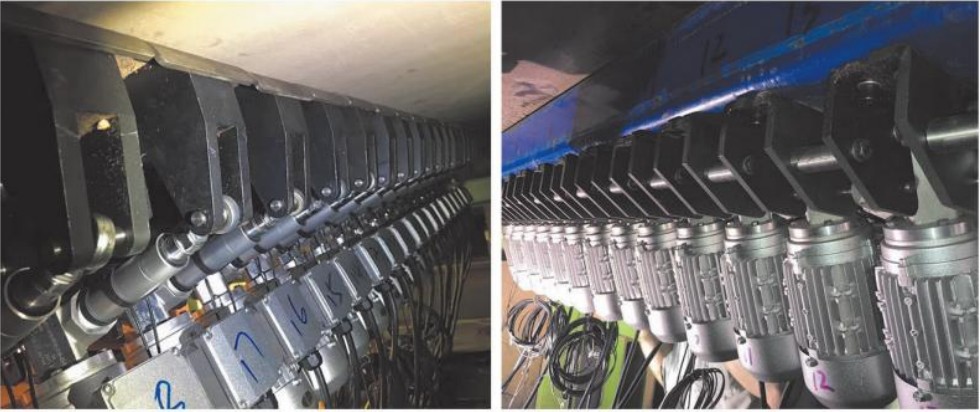
A Machine of Density Equalizer is a specialized component or mechanism used within a wood-based panel mat-forming system to help balance variations in the formed material layer.
Its exact structure depends on the design of the forming machine.
Rather than treating it as a simple conveyor or leveling roller, it is better understood as part of the system that conditions the material profile before pressing.
Depending on the forming configuration, its function may be associated with:
Publicly available wood-based panel equipment listings specifically identify a “Machine of Density Equalizer” as a spare part for board mat-forming machinery, confirming its use within this type of forming system.
A Particle Board or wood-fiber mat is not perfectly homogeneous immediately after material deposition.
Even when upstream metering is controlled, differences can occur because of:
A simplified production sequence is:
Material Preparation → Drying → Glue Blending → Metering → Forming → Density Equalization → Pre-Pressing → Hot Pressing
The purpose of density equalization is not to replace accurate metering.
Instead, it addresses another part of the production challenge:
How evenly is the metered material actually represented in the formed mat?
This distinction is important.
A production line may deliver exactly the required amount of material while still producing an uneven mat.
For example:
Total furnish quantity = correct
but
Local material distribution = inconsistent
These are two different process conditions.
A metering system controls material flow.
A forming system distributes that material.
A density equalization system helps stabilize the resulting mat condition.
Together, these stages create a more complete process:
Accurate Feeding → Controlled Distribution → Density Equalization → Stable Mat → Pressing
This is why a Density Equalizer can complement, rather than replace, upstream metering and forming equipment.
Because several forming components perform related functions, terminology can become confusing.
Primarily associated with spreading or distributing loose particles across the forming width.
Generally used to smooth or level local variations in the material layer.
A broader forming-system component or mechanism intended to help stabilize the mat's overall material condition and density distribution.
In other words:
Spreading = Where material goes
Equalizing = How the material layer is leveled
Density Equalization = How the formed mat becomes more consistent as a whole
The actual functions can overlap depending on the specific forming machine design.
There is no single universal mechanical configuration for every Density Equalizer.
Depending on the forming equipment, the mechanism may interact with the material layer through controlled mechanical action and/or an associated equalizing arrangement.
The general objective can be represented as:
Uneven Mat Profile → Controlled Equalization → More Consistent Mat Condition
The system may respond to material variations by redistributing or removing local excess material, adjusting the mat profile and preparing it for the following pressing process.
Historical fiberboard manufacturing literature describes equalizer or shaving rolls as devices that reduce mat thickness and improve mat uniformity, while noting that final board density also depends on the bulk density of the furnish and other process conditions.
This is an important engineering point:
A Density Equalizer supports density consistency; it does not independently guarantee final board density uniformity.
The complete process still depends on furnish properties, metering, forming, moisture, pressing and machine settings.
A board mat needs consistency not only along the production direction but also across its width.
If one region receives more material than another, the local mat characteristics may differ.
Modern forming-machine descriptions emphasize crosswise feeding and control as part of achieving more uniform forming performance.
A Density Equalizer therefore needs to be considered in relation to the entire forming width.
Important variables can include:
Maintaining a consistent transverse profile can provide a better starting condition for the pre-press.
Crosswise distribution is only half of the picture.
The material profile can also change in the machine direction.
Variations may come from:
A properly integrated Density Equalizer helps the forming line manage these variations as part of the overall process.
The objective is a mat whose condition remains as consistent as reasonably achievable from one section of the production line to the next.
The final board is produced after pressing, but many of its initial conditions are created earlier.
A more consistent mat entering the pre-press gives the downstream system a more predictable starting point.
The general relationship is:
Stable Material Distribution
↓
More Consistent Mat Profile
↓
More Predictable Pre-Pressing
↓
More Controlled Hot Pressing
↓
More Consistent Board Production
The Density Equalizer is only one element in this chain, but it operates at an important transition point.
A leveling roller primarily changes the surface profile.
Density equalization is a broader process concept.
Two mats could have similar visible surface heights while still having different internal material concentrations.
For this reason, density equalization should not be understood as simply making the surface look flat.
The larger objective is to improve the consistency of the material condition within the formed mat.
This distinction is particularly important when discussing Particle Board production.
The performance of a Density Equalizer is closely linked to the furnish.
Important variables include:
Different particle fractions have different flow and packing behavior.
Changes in bulk density can influence the amount of material occupying a given volume.
Moisture can affect flowability, compaction and material behavior.
Adhesive-coated particles can behave differently from untreated particles.
Long, flat or irregular particles may form different mat structures from smaller particles.
Therefore, density equalization should always be evaluated together with upstream material preparation.
The Density Equalizer is not a substitute for accurate material feeding.
If the input to the forming section changes dramatically, no downstream equalization mechanism can completely eliminate the consequences.
A stable production system therefore follows a logical hierarchy:
Accurate Metering
↓
Consistent Material Distribution
↓
Density Equalization
↓
Mat Stabilization
This is why Density Equalizer equipment should be viewed as part of an integrated forming system.
The condition of the mat before pre-pressing is extremely important.
A more consistent mat gives the pre-press system a more stable material layer to compress.
The Density Equalizer therefore serves as a bridge between:
Forming and Pre-Pressing
It helps prepare the mat for the subsequent mechanical compression process.
The exact arrangement varies by forming machine, but the role remains focused on improving the uniformity of the material entering downstream stages.
Possible warning signs can include:
These symptoms do not necessarily originate from the Density Equalizer itself.
Potential causes can also include:
A complete process analysis is therefore necessary before replacing individual components.
Depending on the forming-machine design, a Density Equalizer system may involve several mechanical components.
These can include:
The exact configuration should be determined by the original machine design.
For replacement parts, compatibility between these components is particularly important.
The Density Equalizer interacts with a continuously moving material layer.
Its mechanical geometry therefore needs to remain stable.
Important parameters may include:
Any significant mechanical deviation can affect the equalization effect.
For this reason, manufacturing accuracy is an important part of Density Equalizer performance.
Wood particles and fibers are abrasive.
A forming component that continuously contacts the material can experience gradual wear.
Over time, wear may alter:
A suitable wear-resistant construction can help maintain more stable operating characteristics over a longer service period.
This is especially important for production lines that run continuously.
A Density Equalizer does not always fail suddenly.
Instead, performance may gradually deteriorate.
Operators should monitor:
One section may wear faster than another.
Could indicate imbalance, bearing wear or alignment problems.
May indicate changing working clearance or material interaction.
Repeated corrections can indicate mechanical or process changes.
May point to bearing, shaft or drive-system problems.
Early inspection can help determine whether the issue originates from the equalizer or another stage of the forming process.
A preventive maintenance program can include:
Maintenance requirements should be adjusted according to production capacity, material characteristics and operating hours.
When replacing a Density Equalizer or related component, product selection should start from the original machine.
Important technical information includes:
Different forming machines may use different equalization mechanisms.
Must correspond to the mat-forming width.
Including roller or mechanism dimensions.
Must be compatible with the original supporting structure.
The rotating components must be suitable for actual operating speed.
The machine should provide the required control range for mat equalization.
Particle size, moisture and density should be considered.
Wood-based panel production lines can differ significantly in equipment structure and production capacity.
Therefore, a generic component may not always be suitable.
HUATAO can provide customized Density Equalizer components according to:
This approach is particularly useful for replacement projects involving existing forming equipment.
HUATAO provides forming-section machinery components and spare parts for wood-based panel production.
Our application scope includes:
For Density Equalizer applications, HUATAO focuses on matching the component with the complete forming environment.
The evaluation may include:
Material Characteristics + Machine Structure + Mat Width + Production Capacity + Operating Conditions
This application-oriented approach helps ensure that the supplied component is suitable for the actual production line.
When board quality problems occur, manufacturers naturally look at the pressing section first.
However, some variations may be introduced much earlier.
If the mat entering the pre-press already contains significant differences in material distribution, downstream equipment has less consistent material to work with.
The Density Equalizer operates at this important point between forming and pressing.
It therefore represents an opportunity to improve the uniformity of the material condition before the most intensive compression stages begin.
A wood-based panel production line can be viewed as a chain:
Raw Material
↓
Preparation
↓
Metering
↓
Spreading
↓
Density Equalization
↓
Mat Formation
↓
Pre-Press
↓
Hot Press
Every stage affects the next.
The Machine of Density Equalizer cannot solve every production problem, but it can help stabilize one important variable: the condition and uniformity of the formed mat before pressing.
That makes it a valuable part of a well-designed forming system.
The Machine of Density Equalizer is a specialized forming-section component used to help improve the consistency of the material mat before pre-pressing and hot pressing.
Its importance comes from the difference between simply feeding the correct amount of material and achieving a uniformly conditioned mat.
Its main functions can be summarized as:
Material Profile Equalization
Mat Thickness Stabilization
Improved Crosswise Uniformity
Support for More Consistent Density Distribution
More Predictable Pre-Press Conditions
Stable Continuous Forming
However, final board density is influenced by many process variables, including furnish bulk density, moisture, metering, forming conditions and pressing parameters. The Density Equalizer should therefore be considered as one component of the complete process rather than a stand-alone solution.
For Particle Board and other wood-based panel production lines, the right Density Equalizer design, accurate manufacturing and correct machine matching can help create a more consistent starting condition for the pressing process.
HUATAO Wood-Based Panel Machinery
Email: bella@huataogroup.com
Tel: +86 17731169773
Website: www.woodpanelmachinery.com
HUATAO provides Machine of Density Equalizer, Equalizing Rollers, Spreading Rollers, Brush Rolls, forming-section components and machinery spare parts for Particle Board, MDF, HDF, OSB and FOSB production lines.
#DensityEqualizer #MachineOfDensityEqualizer #DensityEqualizerMachine #ParticleBoardDensityEqualizer #MatDensityEqualizer #DensityEqualizingMachine #ParticleBoardForming #ParticleBoardFormingMachine #ParticleMatForming #MatDensityControl #BoardDensityUniformity #FormingSection #ParticleBoardMachinery #ParticleBoardSpareParts #MatFormingEquipment #MDFForming #OSBForming #WoodBasedPanel #WoodBasedPanelMachinery #HUATAO
can not be empty
can not be empty

HUATAO Wood-based Panel Machinery Co., Ltd
ADD : No.298 Zhonghua North Street, Shijiazhuang 050000 China.
TEL : +86 0311 80690567
EMAIL :bella@huataogroup.com
Web: www.woodpanelmachinery.com
 WhatsApp & WeChat : +86 17731169773